This site was built using Claude Code, but the case study and all thoughts expressed here are entirely mine.
Rare Beauty: a smarter way to find your perfect shade
Redesigning Rare Beauty's 3-question foundation quiz into a dual-path system that meets users where they are: a makeup expert to a complete beginner.
Co-Designer (Team of 2)
Personal Partner Project
Homepage & community features
Figma
Overview
Rare Beauty's quiz is too short
Rare Beauty's existing shade finder asks just 3 questions and covers only foundation, leaving users without the guidance they need to feel confident in their purchase. The result: wrong shades, broken trust, and a preference for in-store shopping that the digital experience was failing to earn.
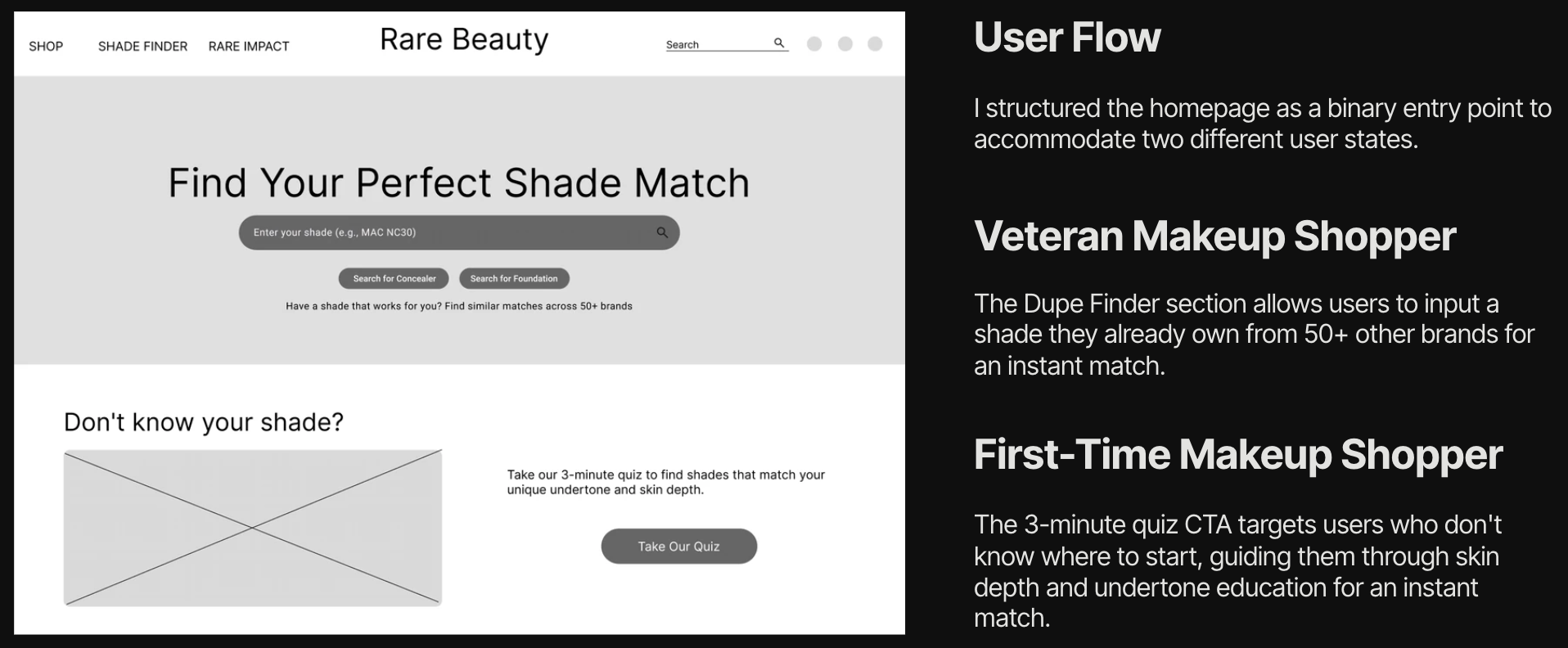
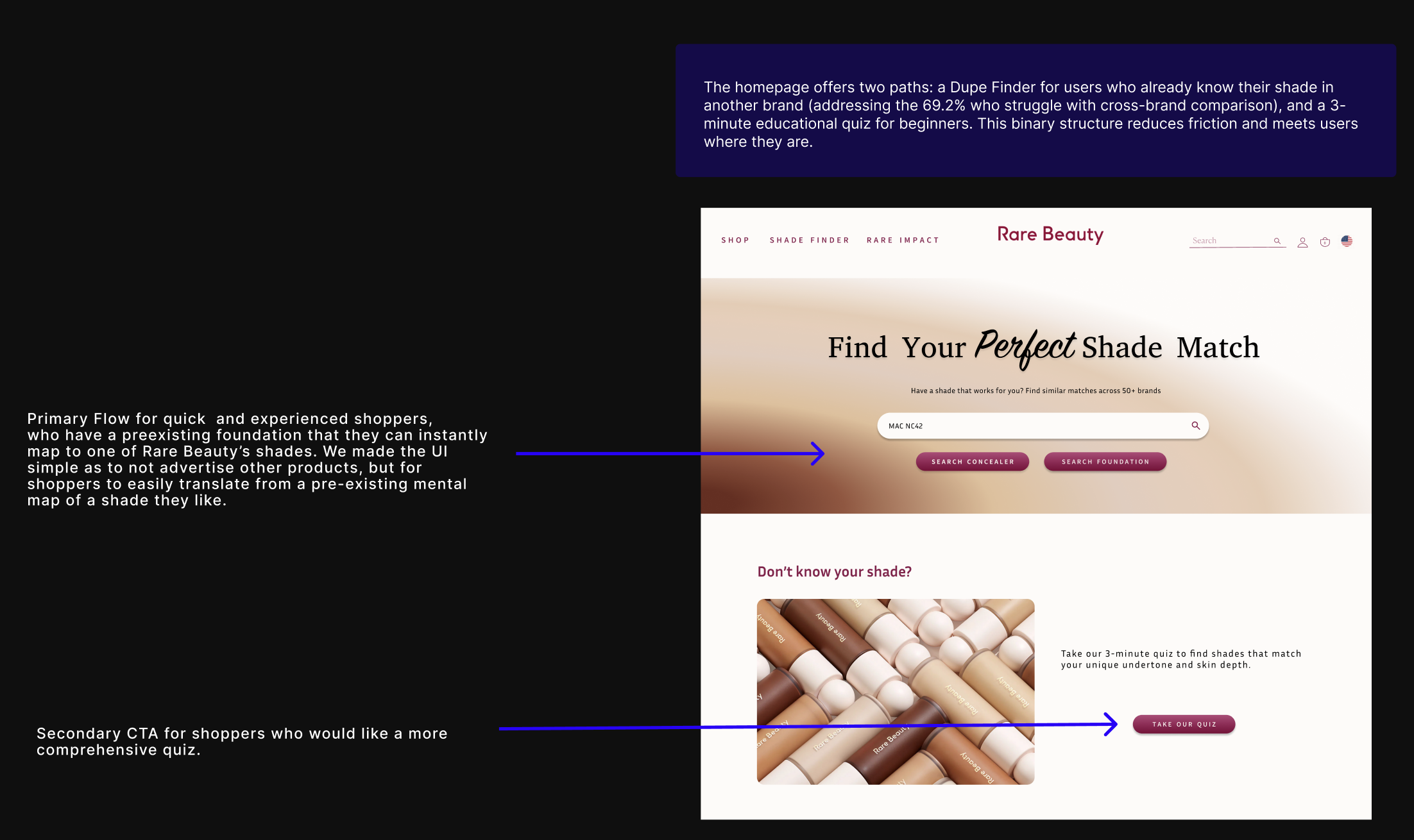
Our redesign replaces the single quiz with two paths: a Dupe Finder for users who already know their shade from another brand, and an Education Quiz for beginners learning about undertones for the first time.
We focused on Gen Z users (ages 18–25) who are shifting toward online beauty shopping but feel burned by inaccurate virtual tools. Our research combined a user survey, a user persona, and a competitive audit of brands that do this better.
User Survey
Used this method because it is fast and convenient to reach online shoppers quickly (13 Gen Z respondents)
User Persona
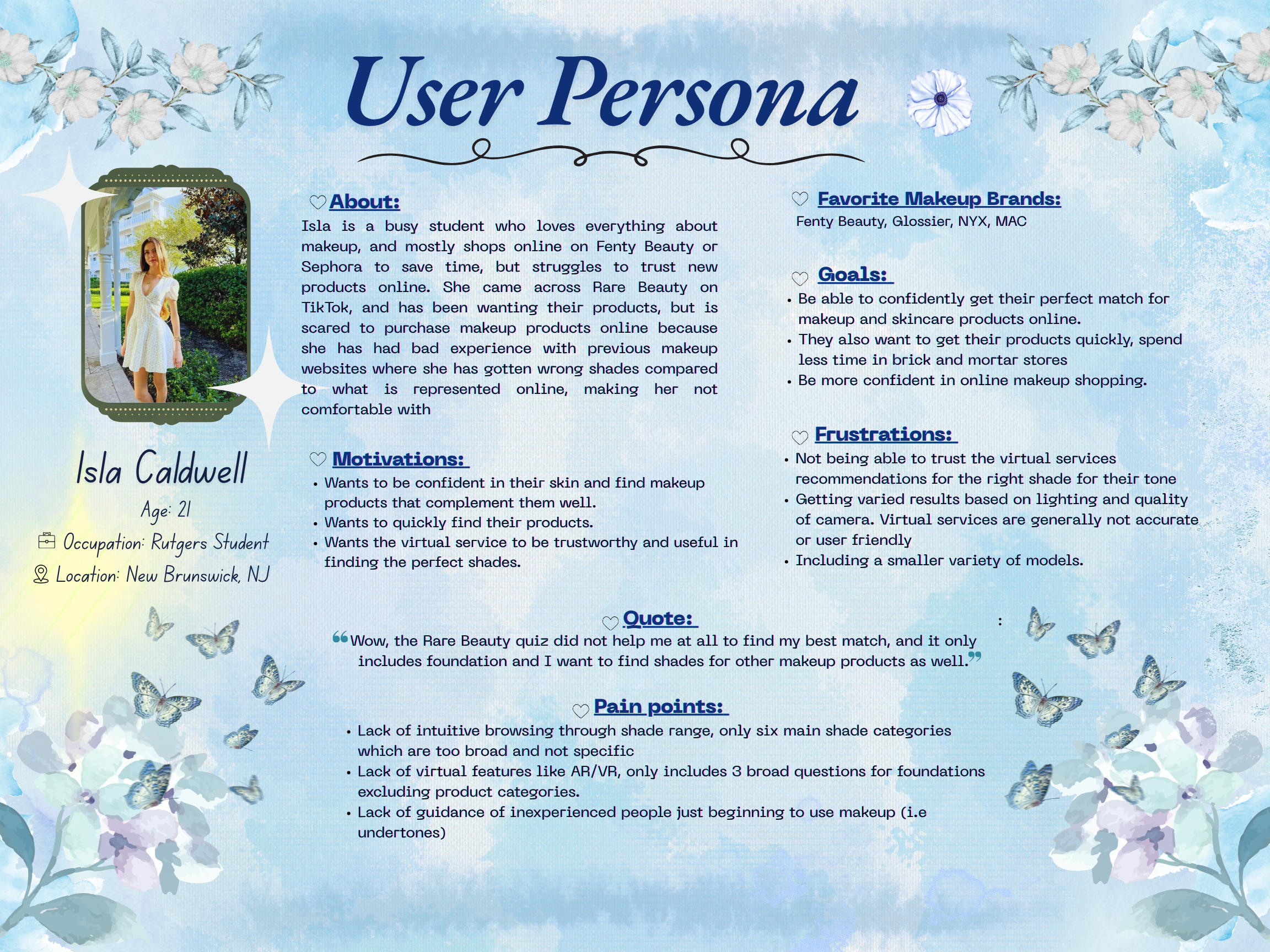
Built to understand browsing behavior and trust patterns for online makeup shopping
Competitive Audit
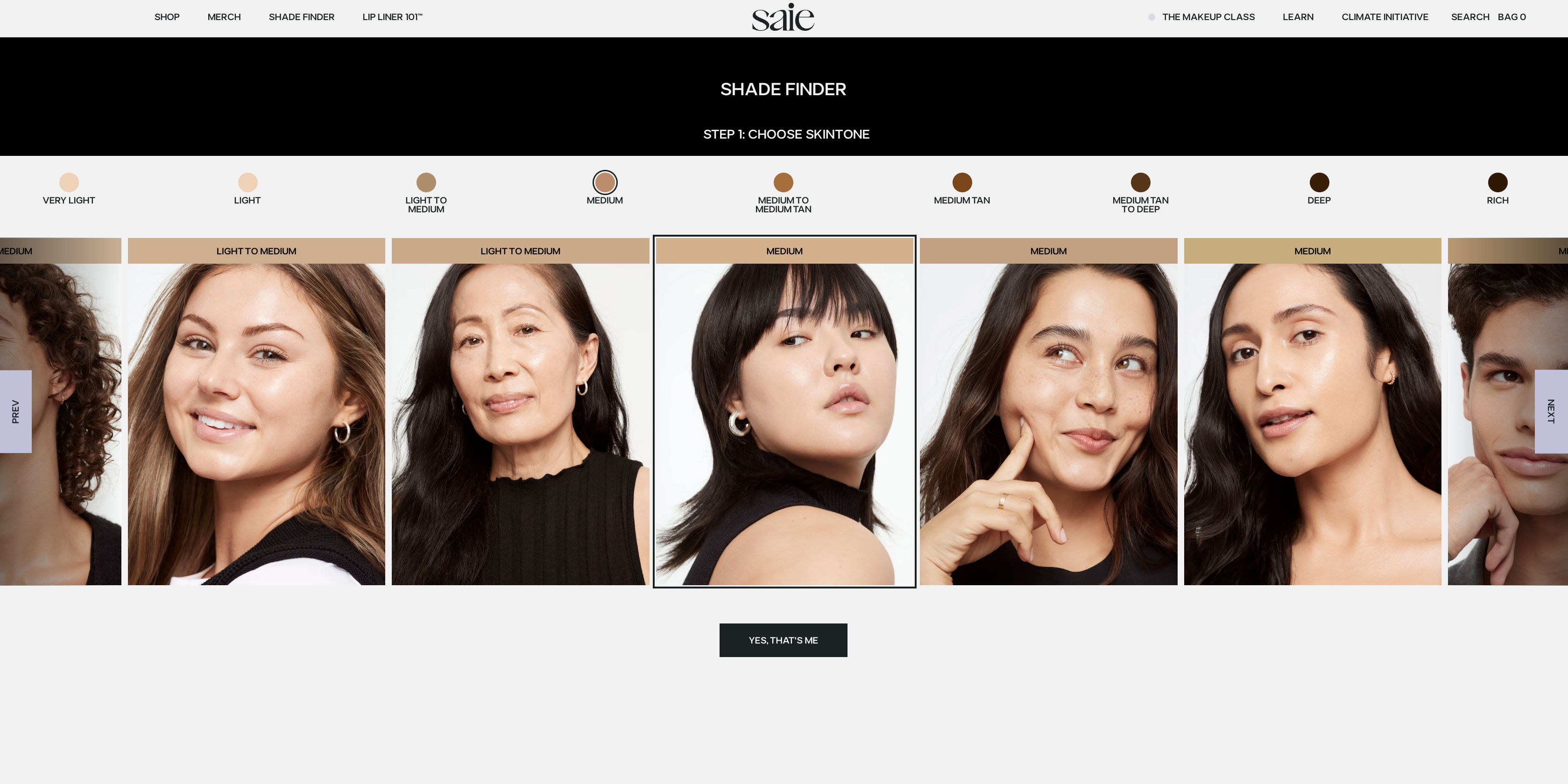
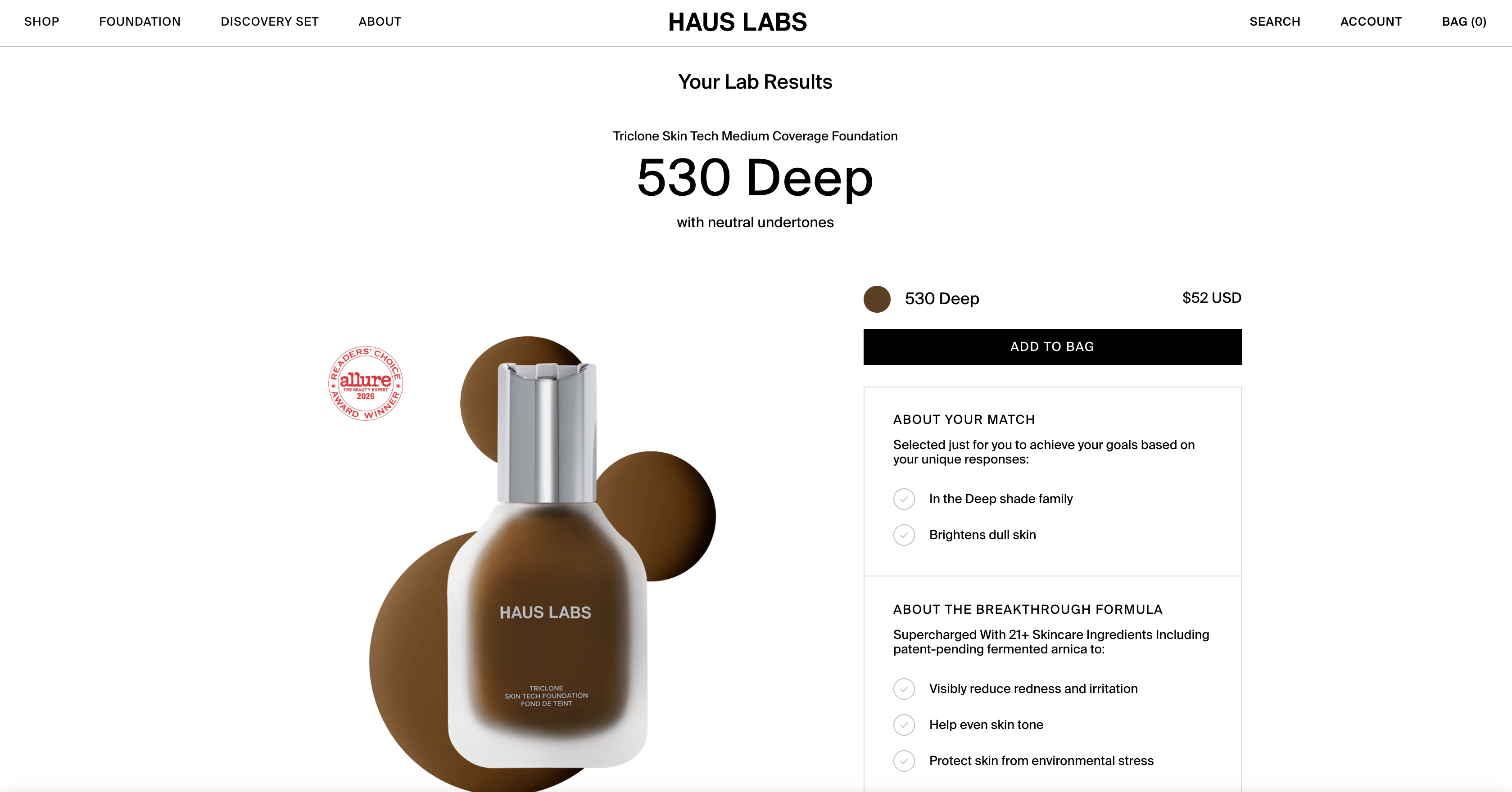
Analyzed Fenty Beauty, Saie Beauty, and Haus Labs for how they structure virtual shade services
Genevieve is a 21 year old Rutgers student who shops Fenty and Glossier online but doesn't trust virtual shade tools after getting the wrong shade multiple times.
User Quote
"Wow, the Rare Beauty quiz did not help me at all to find my best match, and they have such a limited range of shades, it was kinda hard to find the best medium tone complexion when they have such limited options."
What competitors do better
We audited Fenty Beauty, Saie Beauty, and Haus Labs to understand how more trusted shade-matching tools are built. A consistent pattern emerged: representation, education, and visual richness all build trust that Rare Beauty's quiz currently lacks.
Saie Beauty offers 30+ shade representations vs Rare Beauty's 6 — far wider coverage for diverse skin tones.
Haus Labs prioritizes education and minimal UI — building credibility that makes users trust the recommendation.
Users still might not trust quiz results, signalling a need for more community validation to add a human approach to an intimate process like finding a shade.
High-Fidelity Design
Designing for both new and experienced users
The core insight from our research was that users come to shade-finding with very different starting points. Forcing them into the same 3-question quiz fails both groups. Our redesign introduces a binary structure at the homepage level.
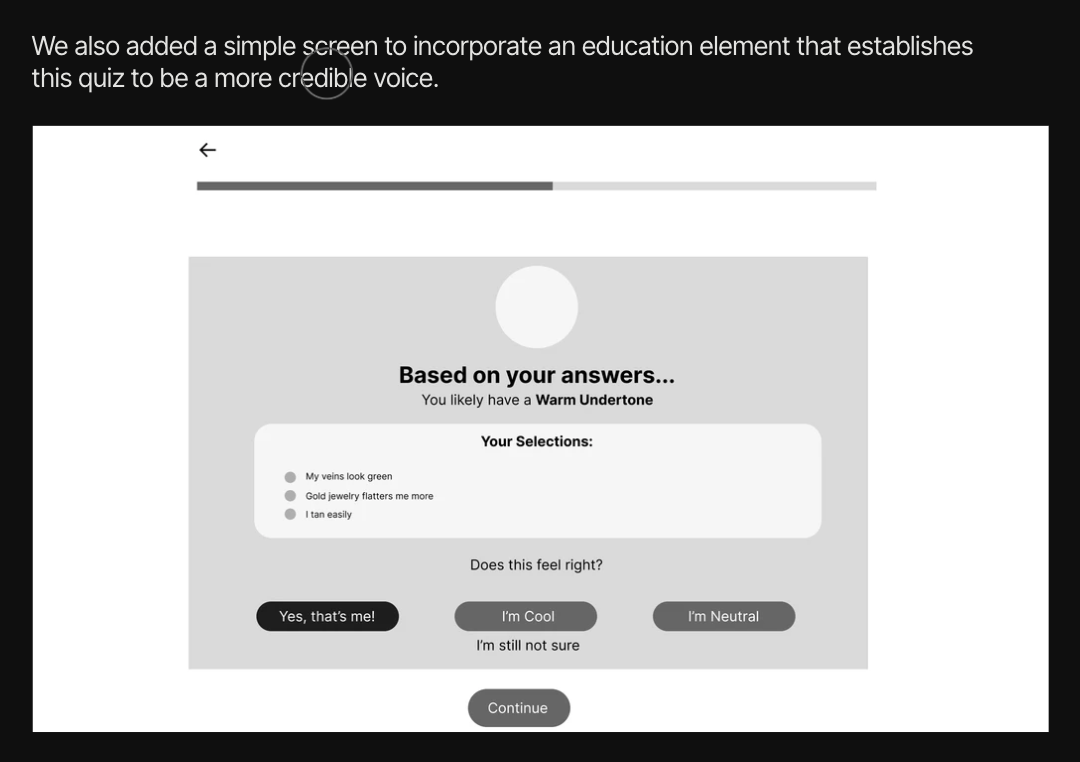
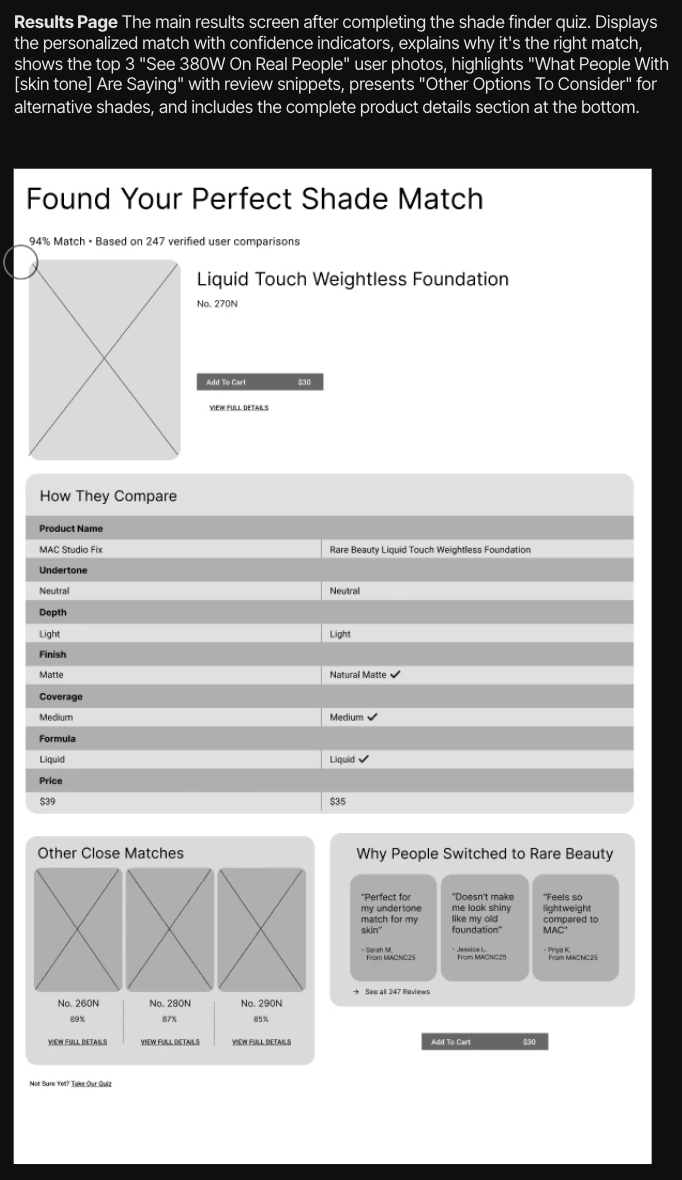
low-fi design: dual-path homepage (Dupe Finder search + quiz CTA), education-first quiz screen, and shade result page after quiz highlighting add to cart CTA and community validation.
01
Dupe Finder Search
A search bar that lets experienced users type in a shade they already own from another brand and instantly find their Rare Beauty equivalent. This addresses the 69.2% who struggle with cross-brand comparison without forcing them through a full quiz.
An 8-question quiz that teaches as it asks — visuals explain undertone concepts, blurbs define terms like "oily" or "combination," and a summary screen shows users exactly what their answers mean before they commit to a shade.
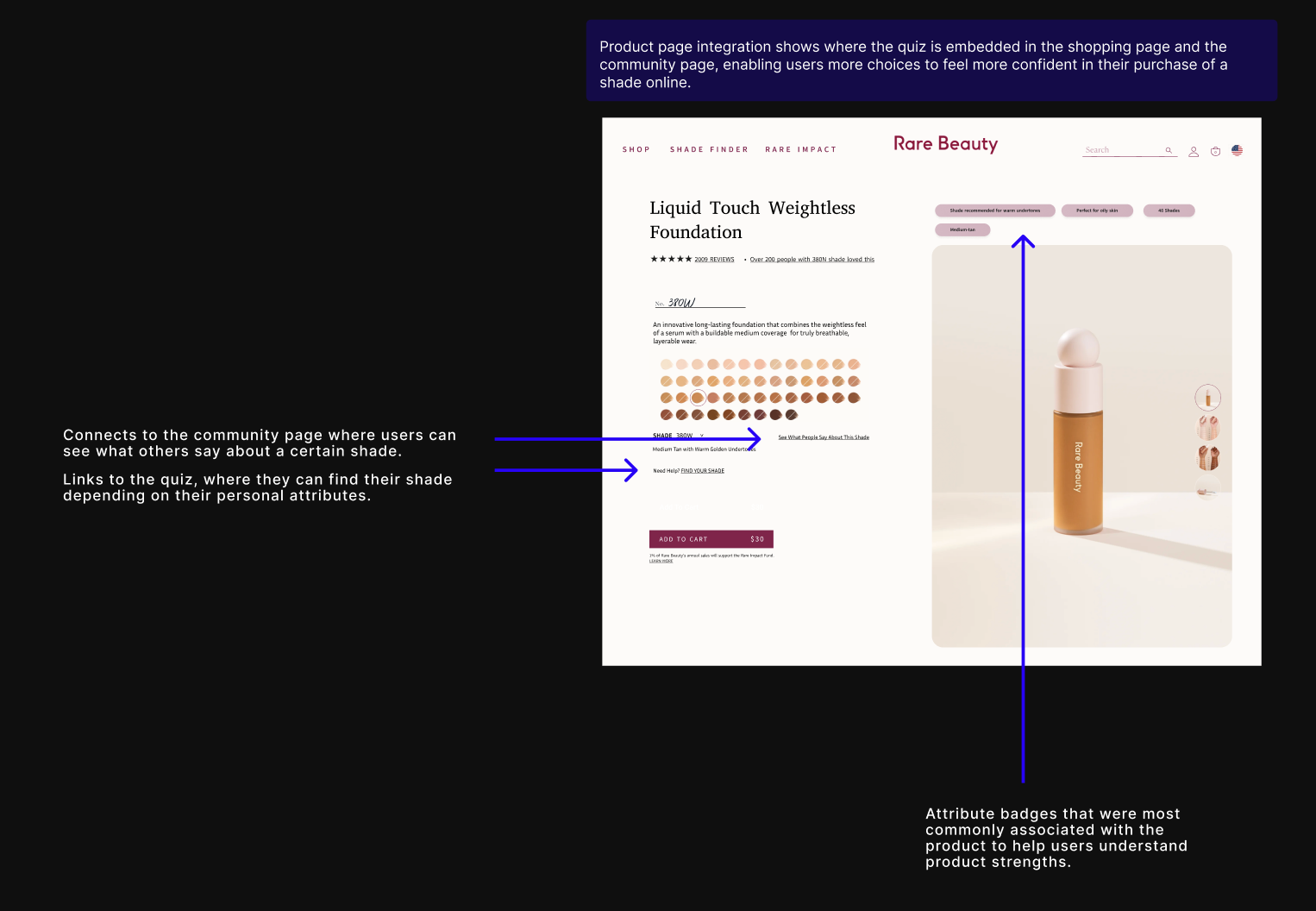
Above: product page integration of quiz and dupe finder
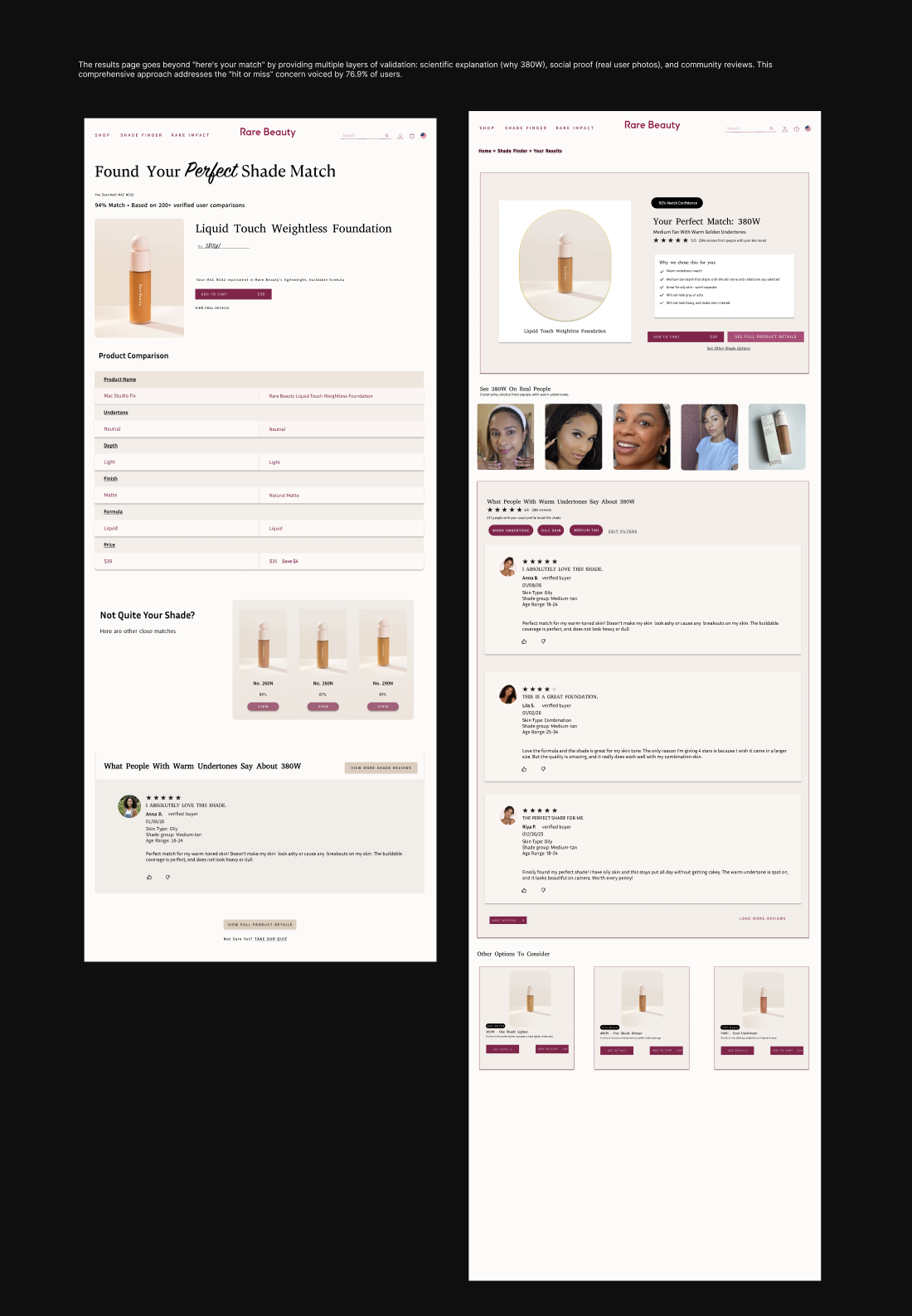
Above: results page for cross-brand matching and quiz
03
Community Validation Layer
Results pages surface real user photos, filtered reviews by skin type and shade group, and quotes from people who switched from competitors. Human proof builds the trust that quiz results alone can't.
Real user photosFiltered reviewsSocial proof
Outcomes
What this project produced
Biggest Accomplishment
Learning Figma from scratch and producing a on-brand website that matched Rare Beauty's visual aesthetic which was a real challenge as a first-time user of the tool.
My Strongest Idea
The Dupe Finder search bar which let users translate a shade they already own into a Rare Beauty equivalent without touching the quiz. Efficient and directly tied to the 69.2% cross-brand finding.
Collaboration
Working as a pair meant listening, building on each other's ideas, and resolving creative disagreements. The quiz format emerged from bouncing ideas together where neither of us would have landed there alone.
Lessons learned
1. Trust is the actual product
Every design decision including the confirmation screen and community reviews was about making users confident enough to click "Add to Cart." Trust leads to conversion in online shopping.
2. Meeting users where they are beats a one-size-fits-all flow
The dual-path structure was our most important architectural decision. Forcing an experienced shopper through a beginner quiz, or a beginner into a search bar, creates friction for both.
3. Figma skills compound fast
Starting from zero and finishing with a polished, on-brand prototype confirmed that the best way to learn a design tool is to use it on something you actually care about making look good.